Detailed Site Investigation (Phase 2 ESA) Melbourne & Geelong
Confirm and characterise contamination with a rigorous Phase 2 ESA — Terralis delivers data-driven site investigations across Melbourne, Geelong and regional Victoria.
Get a Phase 2 ESA Quote
When a Preliminary Site Investigation identifies areas of environmental concern, a Detailed Site Investigation (Phase 2 ESA) is required to characterise the nature and extent of contamination through intrusive sampling. Terralis designs and executes targeted Phase 2 investigations across Melbourne and Geelong, providing the data needed to support risk assessment, remediation planning and EPA Victoria compliance.
Site-Specific Work Plan
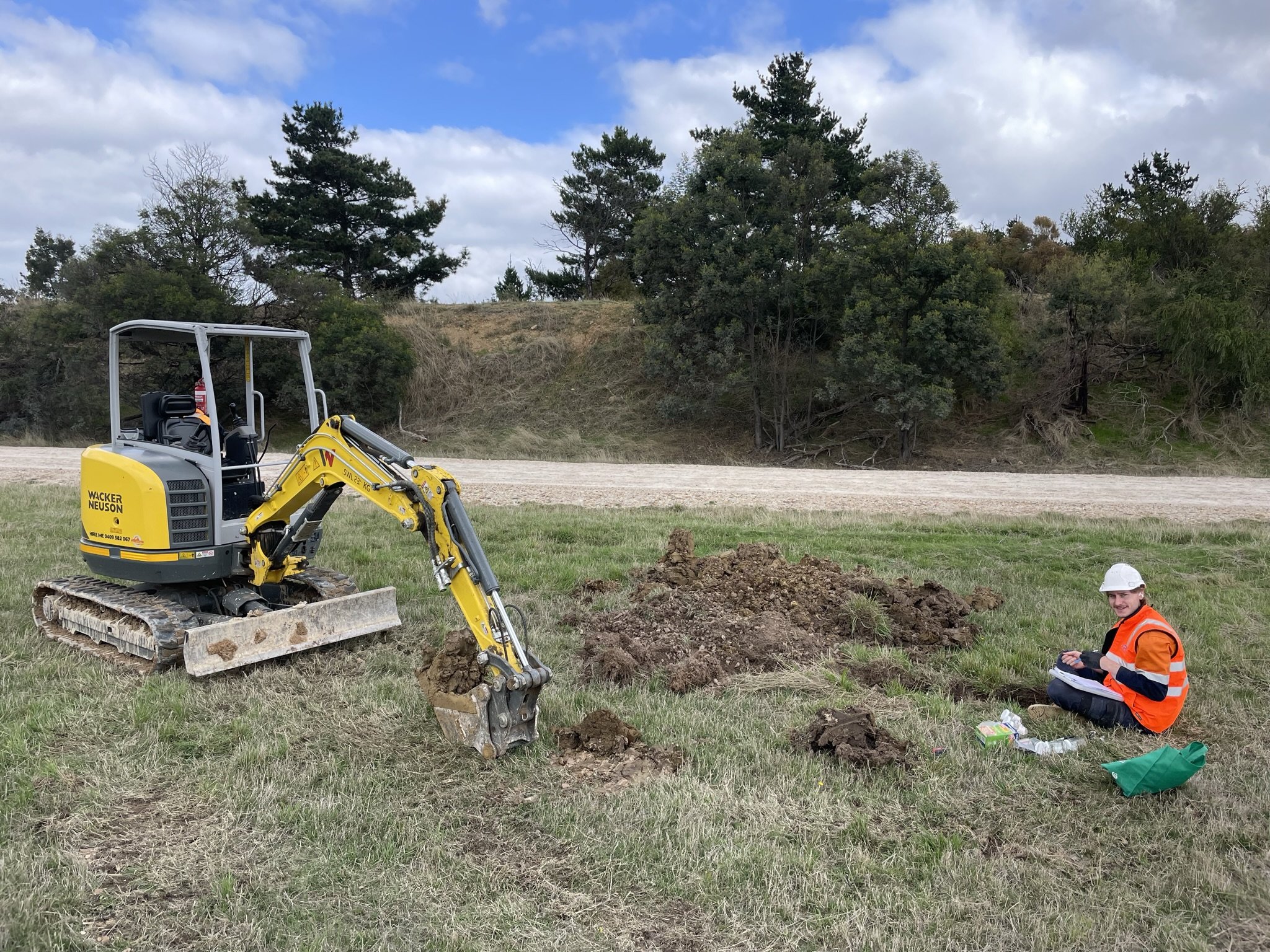
Terralis develops a detailed, site-specific investigation work plan before any field activities commence. The work plan identifies the specific Areas of Environmental Concern to be investigated, selects appropriate sampling locations and depths, specifies drilling and sampling methods suited to site access and subsurface conditions, and nominates the analytical suite required to characterise contamination. This structured approach ensures every dollar spent on field investigation generates the maximum data value and supports defensible, EPA Victoria-compliant reporting.
Terralis conducts targeted soil sampling using the most appropriate method for your site — including hand auger, direct-push, sonic or rotary drilling — selected based on site access constraints, soil profile and the nature of contaminants of concern. Samples are collected at specified depths, field-logged and screened with a photoionisation detector (PID) for volatile contaminants before submission to NATA-accredited laboratories. Chain-of-custody documentation is maintained throughout to ensure sample integrity and legal defensibility of results.
Where groundwater assessment is required, Terralis designs and installs dedicated groundwater monitoring bores to the correct screen depth and aquifer interval. Bore completion is selected based on target depth, formation stability and groundwater chemistry requirements, using materials compatible with the contaminants of concern. Monitoring bores installed by Terralis are constructed to last — providing a reliable long-term monitoring network for groundwater trend assessment and EPA Victoria compliance reporting on Melbourne and Geelong sites.
NATA-Accredited Laboratory Analysis
All soil and groundwater samples collected by Terralis are submitted to NATA-accredited laboratories with validated analytical methods for the specific contaminants of concern. Our standard suites cover total petroleum hydrocarbons (TPH-F1 to F4), BTEX, heavy metals, polycyclic aromatic hydrocarbons (PAHs), chlorinated solvents, PFAS and site-specific analytes. We specify appropriate reporting limits, hold times and QA/QC requirements to ensure results are accurate, comparable to assessment criteria and accepted by EPA Victoria and planning authorities.
Contamination Delineation & Mapping
Terralis interprets laboratory results in the context of site geology, groundwater flow direction and contaminant behaviour to spatially delineate the extent of soil and groundwater contamination. We prepare detailed cross-sections and contaminant plume maps that clearly communicate contamination extent to clients, regulators and technical reviewers. Accurate delineation is essential for reliable remediation cost estimation, waste classification planning and development scheduling — preventing costly surprises during construction on Melbourne and Geelong sites.
Criteria Assessment & Risk Evaluation
Laboratory results are systematically compared against applicable EPA Victoria soil and groundwater assessment criteria under the National Environment Protection (Assessment of Site Contamination) Measure (NEPM), with criteria selected based on current and proposed land use. Terralis clearly identifies which contaminants exceed relevant criteria, quantifies the extent of exceedance and documents the implications for risk, development planning and regulatory obligations — providing a transparent, defensible basis for all subsequent decisions on your Melbourne or Geelong site.
Human Health & Ecological Risk Assessment
Where contamination is identified, Terralis prepares a human health and ecological risk assessment (HERA) evaluating the plausibility and significance of exposure pathways for current and proposed site users. The risk assessment considers the nature and concentration of contaminants, the characteristics of potential receptors and the likelihood of exposure via ingestion, inhalation and dermal contact pathways. Risk assessment findings inform remediation target setting, development design and the need for EPA Victoria audit certification across Melbourne and Geelong sites.
Phase 2 ESA Report & Remediation Options
Terralis prepares a comprehensive Phase 2 ESA report that presents investigation findings, laboratory data, risk assessment outcomes and remediation options in a clear, well-structured format suitable for EPA Victoria auditors, planning authorities and financial institutions. Remediation options are presented with comparative cost ranges, feasibility considerations and indicative timeframes — equipping clients to make informed, commercial decisions about how to progress their Melbourne or Geelong site from contaminated investigation to clean, bankable closure.
Frequently Asked Questions
Get answers to common questions about our environmental services and approach.
A Phase 2 ESA is typically required when a Phase 1 assessment identifies areas of environmental concern — such as former fuel storage, industrial processing or waste disposal. It may also be required by EPA Victoria, a planning authority or a lender before development approval or property settlement proceeds on affected Melbourne or Geelong sites.
Common contaminants include petroleum hydrocarbons (TPH, BTEX), heavy metals, chlorinated solvents, PAHs, PFAS, asbestos in soil and pesticides. Terralis tailors the analytical suite to the specific land-use history and pathways identified during the Phase 1 investigation to avoid unnecessary testing costs.
Sample numbers depend on site size, contamination complexity and regulatory requirements. Terralis designs sampling programs that meet EPA Victoria guidance while minimising cost. We use a phased approach — starting with targeted samples and expanding if contamination is detected — to keep investigation costs proportionate.
Field work typically takes one to three days for small to medium sites. Laboratory turnaround is usually 5–15 business days depending on the analytical suite. For Melbourne and Geelong clients, Terralis typically delivers final Phase 2 reports within 3–5 weeks of mobilisation.
Yes — Terralis Phase 2 reports are prepared in accordance with NEPM guidelines and EPA Victoria's site contamination assessment framework, and are routinely accepted by regulators, planning authorities and financial institutions across Victoria.
What Our Clients Say
We’ve helped organizations across various industries achieve environmental compliance and sustainability goals.
Posted on Google 

Jonathan Lan

Mick has done a fantastic job for us at a site under environmental audit. His price was reasonable, work was efficient and no unnecessary charges. Great guy with good work ethics! Recommended!
Posted on Google

Matt Canny
Mick did a great job for me over in Brighton. We had a 2000m2 site that needed testing. Mick was really helpful and able to bring his own excavator to complete the testing holes. The turn around on the lab results and report was great. Highly recommend.
Posted on Google

Luc Chards
Mick at Terralis has performed many soil contamination assessments that have been timely and effective in meeting our needs. Highly recommend his sensible approach. Rich
Load more